Showing posts with label technology. Show all posts

Monday, January 29, 2024

AI Guardian - a summary post

This post will be updated for a week or two. It's to track those interested in the AI Guardian concept; this and similar posts have the tag "AIGuardian"

Friday, December 29, 2023

What I am up to these days - Smartphones for all (updated)

Update 12/29/2023

I've retired the Smartphones for all project, at least for now. I really couldn't find much interest in the topic, so I came to feel I was writing something just for myself. I have retired the sphone4all.com domain, it will be soon available for others (including, certainly, spammers can scammers - no way to avoid that).

I have moved archived the WordPress site as a subdomain of another domain I own. If for any reason you'd like to see the archives they are at:

https://www.sphone.bethebestyoucanbe.us/

I've removed the URLs from the post below.

Original: 4/2018

This blog is quieter than it used to be. There are a few reasons for that, but mostly I’m spending blogging time slogging away on the Smartphones for All book project — which is now iPhone specific. I publish chapter excerpts on a blog there every few weeks. Here are a few recent examples:

You can follow that project by blog feed, or on Facebook or visit the blog to see all the recent posts.

I no longer make predictions as to when I’ll be done. I know the topics to cover, I write and revise, one day it will be finished. I plan to do the Amazon self-publishing thing.

Saturday, November 11, 2023

AI and special needs adults: The AI Guardian is in sight

Over the past decade I've written on social media about the concept of an AI Guardian, but I realize I've never put it into a blog post [4]. With the release of the LLM AIs [1] including ChatGP4, ChatGPT plugins,  and recently GPT Agents (GPTs) the AI Guardian is much closer than I'd expected. So it's time to write something.

First, of course, I decided to ask ChatGPT. I've never seen the concept of an AI Guardian online, but evidently I've been looking in the wrong places. As of its April 2023 incarnation ChatGPT4 has quite a bit to say:

You: What do you know about the concept of an "AI Guardian" for special needs adults?

ChatGPT

The concept of an "AI Guardian" for special needs adults, particularly those with low IQ or autism, revolves around using artificial intelligence to provide support and assistance in various aspects of daily life. This concept is still emerging, but it has several potential applications: 

Safety Monitoring: AI can be used to monitor the individual’s environment for safety hazards or emergencies, alerting caregivers or authorities when necessary.

Routine and Schedule Management: AI systems can help in managing daily routines, providing reminders for medication, appointments, and other important activities.

Behavioral Analysis and Support: For individuals with autism, AI can analyze behavior patterns to predict and mitigate potential stressors or overstimulation.

Communication Aids: AI-driven tools can assist in communication, especially for non-verbal individuals or those with speech difficulties, by interpreting signs, gestures, or other forms of non-verbal communication.

Learning and Skill Development: AI can offer personalized learning experiences and skill development activities, tailored to the individual’s needs and learning pace.

Social Interaction Facilitation: AI can help in guiding and facilitating social interactions, which can be challenging for some individuals with special needs.

Health and Wellness Monitoring: Continuous monitoring of physical health, including vital signs, sleep patterns, and physical activity, ensuring prompt response to health issues.

This concept is still in its nascent stages and raises important considerations regarding privacy, ethical use, and the need for human oversight. It's crucial to balance the benefits of AI assistance with the dignity and autonomy of the individuals being assisted. As a physician with experience in health informatics [2], you'd appreciate that while AI can provide valuable tools, it cannot fully replace the nuanced understanding and empathy provided by human caregivers.

Well, that covered the bases. I would love to know what ChatGPT4 has been reading on this topic.

In our family iPhones and narrow focus AIs like Google Maps have been both an essential tool for independence and a screen addiction curse [3]. The ability to locate our children was key to them learning to navigate by bike and bus. Mapping tools compensated for very limited navigation ability. Calendaring helped with anxiety and organization. Notes and Reminders helped with memory and recall limitations. Beyond the obvious advantages of messaging we discovered both our children were better able to process text messages than verbal communication -- especially for difficult topics.

Now there is the near term prospect of far more support going forward. Monitoring email, messaging and apps for the scams and frauds that live on the cognitively disadvantaged. Monitoring financial transactions for worrisome trends and events. Monitoring home environments for worsening or dangerous conditions. Encouraging better diet and activity.  Acting as a job coach. Appropriately paced and reinforced lifelong learning. Guiding our children through the vast complexity of medical care. Even providing a form a companionship in time or facilitating finding company in the physical world. Doing, in other words, what Emily and I do after we are incapacitated or (inevitably) dead.

In the absence of personal immortality for Emily and I the AI Guardian is the best hope for our children's longterm health and happiness. Even as I have profound concerns about the disruption that comes with the rise of the modern AI I also have hope for a better options for the cognitively disadvantaged.

- fn -

[1] Some dislike applying the term "AI" to Large Language Models because they don't appear to be conscious or sentient.  Much of my professional career was loosely related to precursors of modern AI and there is absolutely no doubt that in 1995 we'd have called ChatGPT a bloody scary AI. The goalposts are mobile. LLMs are AIs by any reasonable definition. Insofar as we understand human cognition we do much of the same things that LLMs do.

[2] This "as a physician" bit startled me until I remembered that I'd given ChatGPT4 that information as a persistent context for our sessions.

[3] I tried writing a book on how best to balance these harms but I gave up when I finally accepted that there was absolutely no interest in such a book from the community I was writing for.

[4] A 2015 post on Google Inbox was the closest I could find on the topic of AI assistance. I tagged that nsAI for non-sentient AI.


Friday, November 10, 2023

Email cleanup - reducing predation opportunities

After falling prey to a predatory "Second Swing" (golf) promotion #1 agreed to let me cleanup his email stream.  He's fond of signing up for email but, inevitably, there was more garbage than he could handle.

I unsubscribed from about 20 lists and deleted perhaps 5000 messages -- all junk.

I'm hoping he'll let me do this periodically. He's particularly vulnerable to email marketing but he does use his email and he dislikes clutter.

Sunday, February 11, 2018

Qustodio "parental" controls for iOS - no longer compatible with modern web

My Qustodio review [1] was delayed because I signed up for the School (professional) version rather than the Home version (long story, not interesting). The two versions seem to have a lot in common, but there important differences. The Home version has an iOS app for managing users, the School version must be managed by a desktop browser (no app, no support for iOS browsers).

Unfortunately I discovered fatal flaws to Qustodio’s approach that mean I won’t be testing their home version. The short version is that they route all traffic through a VPN that isn’t compatible with modern requirements for SSL connections. 

For reference here at the notes I prepared on reviewing school/professional version.

—————————-

The “School” version of Qustodio is marketed to small schools, non-profits and libraries. I signed up for the 5 device $10/month plan.

Like the Family (home) version the school version manages desktop and mobile devices, but I only looking at their iOS device support. I installed on 3 iPhones, two in active use by my Explorers, one a test phone for my book project. This is what I found.

How Qustodio (school) works

Qustodio uses Apple’s iOS device management technology. They install a “Configuration Profile” that  allows remote configuration of some of Apple’s built-in Restrictions. The installation is simply downloading the Profile from a link. Once installed all net traffic is routed through a Qustodio VPN. 

When Qustodio is installed the iOS VPN setting will be enabled. A user can toggle it off but this is really a UI error, it will turn itself back on.

Customer support and leaving Qustudio: C

I worked with customer support to see if I could switch my account from School to Home. Customer support was responsive but they are not native English speakers. They may be relying on translation software. They didn’t understand my question. (I’m pretty sure there’s no way to do that transfer.)

To leave Qustodio one must first delete the Profiles from each device. To delete one must know the password that was emailed to the account manager during installation. There’s no way to retrieve that password from the management panel (there must be a way for customer support to retrieve it!). [Update: It’s obscure, but if you go to Settings and Devices and delete a device you’ll see a warning dialog that shows the removal password for the device.]

The next deletion step is to find the Profiles. On one device the Profile was under the main Settings menu, in two others Profiles were under Settings:General:Profiles. I have no idea why there were two different locations, it didn’t seem to be related to the installation method.

The uninstall process doesn’t scale to a large number of users, the “school” product is aimed at very small schools.

The future of the product: D-

Google is slowly rolling out their own web based device management platform for families. They are responding to pressure from regulators. This could be a big deal, because Android’s built-in parental controls were lousy. Apple, again responding to pressure from Europe and even large investors, may also provide a web based way to manage devices. Even if Apple does a poor job these two developments may kill the home user market and Qustodio’s school solution is pretty limited.

Alas, there’s an even bigger problem - see Usage.

Installation: B

Installation isn’t too bad as long as you don’t try following the directions for the Home version! Create  user in the web management console, then either send an email to their device or use a browser on their device to navigate to www.qustodio.com/pro/downloads. Then click the links and complete the install. Just be sure not to save the management console password to their device when prompted.

Usage: F

Alas, the Qustodio VPN doesn’t handle SSL connections correctly. Google treats it as a “impersonating” connection, other sites produced an ERR_SSL_PROTOCOL_ERROR message. OS X parental controls had similar issues 5 years ago; since then SSL connections have become standard. Today nobody would consider this acceptable. The final nail in the coffin is Qustodio’s web site doesn’t address the problem. That suggests a limited future for their iOS product.

- fn -

[1] I’ve been spelling it “Qustudio”. It’s actually Qustodio. I wonder how they came up with that name. I’ve gone back and fixed up my old posts. 

Update 2/17/2018: Qustodio never responded to my questions about their VPN service. In addition to the issues above #1 son was being routinely asked for his VPN password. I removed all the phones from the service, and found when you delete a device you are given the device password. So it’s available, but obscure. Then I removed all accounts and closed my account. Account closure seemed to work, now I have to see if billing stops.

Sunday, January 28, 2018

Vulnerable user support: Qustodio review and PC Magazine parental control page

It’s been a while since I reviewed MMGuardian and similar parental control apps. The last time I did this I promised to took at Qustodio, but life got in the way. Now I’m back to the topic, preparing to update one of the tougher chapters in my book - Smartphones for All.

I signed up for Qustodio and quickly ran into some issues with possibly outdated documentation. I say “possibly” because there may be some quirks related to my subscribing with an old test account they gave me. So I’ll get to evaluate their user support too. I’ll put that post out after I get things fixed.

In the meantime I’ve put out a call for feedback on use of “parental control software” to support vulnerable iPhone users of all ages. I’d particularly like to hear from users of Qustodio and MMGuardian with iPhones.

PC Magazine (I remember their glory days!) did a pretty thorough review of Qustodio, through it I found their “parental control and monitoring reviews” stream. The latter is a good general resource, but they should have included MMGuardian.

The Qustodio review makes much of how ‘old’ the Qustodio site looks. I didn’t bother me, but having an ‘old’ looking site can be a marker for weak financials. The review is Android-centric, that makes sense because there are effectively no parental controls with Android. If you want something you need to pay. iOS devices have built in restriction abilities so they get less attention. They still hit most of the key points for an iOS users, but my review will be more extensive.

Sunday, May 22, 2016

Universal data access for all Americans - what would it look like?

The NYT has another “digital divide” article, this time using Detroit. I think they might be doing a series on this topic.

The problem of net access isn’t unique to Detroit, it applies to every low income American, which includes pretty much every special needs adult. A smartphone (net phone?) isn’t an option, it’s a necessity for modern life [1]. That’s one the reasons I’m writing my book on smartphones for special needs teens and adults.

It’s not hard to give everyone a smartphone. We’ll be drowning in cheap Android devices soon. The problem is data access. Home WiFi, which is notoriously unreliable and complex, costs at least $35/month in most markets. Home WiFi is too complex for most people to maintain anyway. Cellular data costs about the same per month, but it’s tricky to meter and it’s per-person, not per-family. For a family of five we’re looking at $175 a month — too much for a low income family.

So we need some universal mobile data access that everyone gets. Something around 1GB a month. That’s enough to support essential interactions, but not enough for streaming video. 

I’m thinking we’ll either end up with something that’s funded by advertising (Facebook, Google) [2] or a public mandate. It might be a good idea to do both. Either way it will need to incorporate some kind of intelligent data use and filtering.

Whatever happens supporters of special needs adults should be engaged.

[1] Many government programs still have ancient web sites that don’t work well on a smartphone browser. The good news is that hackers are tearing those web sites apart, so they’ll need to be upgraded. In time we may need to bring ADA suits against government web sites that are not smartphone accessible.

[2] Low income advertising, best seen on daytime TV, is often predatory. That is, it’s advertising for services and products that are largely harmful scams. That will be a problem.

Wednesday, May 18, 2016

MMGuardian - Review of an iPhone parental control and usage monitoring service

Yesterday I wrote about using MMGuardian with an Android device. Today I’m continuing research for my book project and my upcoming local (St Paul, MN) presentation on May 25th by reviewing MMGuardian on an iPhone.

Google and Apple have taken very different approaches to remote restrictions on mobile devices. Google has almost no built in restriction capabilities, but third party products like MMGuardian or Screen Time can dig deep into the operating system. They can monitor and disable SMS or phone services and they can lock the phone on a schedule. I haven’t used MMGuardian enough to know if this affects battery life or Android stability; that probably depends on how much support Google has built into Android.

For a parent, or a Guide working with an adult or teen with a cognitive disability, the iPhone restrictions are a big improvement on what Android provides. On the other hand, if you pay the $35-$60 a year for a 3rd party service, Android pulls ahead.

So how does an iPhone plus a third party service compare?

The short answer is that Android plus a third party service is better than an iPhone plus a third party service. At least if the service is MMGuardian, but as I’ll explain below I think it’s the same for all vendors. Compare this iPhone screenshot on the control portal (family.mmguardian.com) to the one I did for Android yesterday:

iPhone

MM Guardian

Android

MMGuardian Android

MMGuardian provides identical web filtering options for both platforms, but on Android phones MMGuardian provides fine grained control of app behavior. Individual apps can be turned on or off including apps that access media. For iPhones the only option is to disable access to video (movie and TV but not music video) and any apps purchased from the App Store [1]. Apple’s native apps, including Music, are not affected; a different control allows remote disabling of Safari, FaceTime and the camera. 

I’m sure MMGuardian’s iPhone limitations are actually Apple’s limitations. I’ll go over that in a technical appendix, but I did find one problem that belongs to MMGuardian:
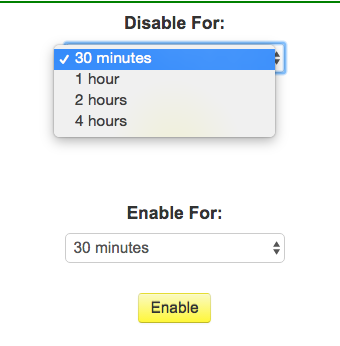
MMGuardian Disable Issue

Both of these drop downs have the same options. So what do you do if you want to undo a Disable action? When I clicked Disable a 2nd time I got an error message saying the phone could not be reached. That’s a bug of some kind.

When I clicked Enable for 30 minutes everything returned — but what happens when the 30 minutes expire? Does it return to disabled? (It stays enabled — this is just a poorly structured UI. The options shown in this screen should change based on the Time Limits screen.)

MMGuardian for iPhone costs $20/year and there’s no family plan. MMGuardian for Android costs $35/year but there’s a $70/year family plan. I think MMGuardian (or something like it) is a necessity for an Explorer’s Android, but for an iPhone Explorer it’s not as simple. Most of what MMGuardian does, except for the web filtering, can be managed through the iPhone’s native restrictions.

Even so, I would have said MMGuardian is worth it for many Explorers — but I give the vendor two demerits for failing to document the uninstall procedure! This is particularly odd because it is well documented for Android devices.

Perhaps it is not documented because, unlike Android phones, there’s nothing to stop the restricted user from doing the uninstall themselves. In Settings:General Scroll down to find a Profile or Managed phone setting. Tap on it until you get the remove icon, then remove the profile. Now delete the MMGuardian app. Deleting the Profile will cause MMGuardian to send a notice to the Guide’s email address.

Once you’ve done this (but not before), you can go to family.mmguardian.com Settings and Delete the number from the MMGuardian account.

I get that MMGuardian doesn’t want to admit that device management can be so easily circumvented, but hiding the documentation is doing them no favors. It’s not something they can fix by the way, Apple has historically required ‘the consent of the governed’ for Mobile Device Management (they are changing that for schools, where, shockingly, the governed are rather rebellious).

In practice, for the Guide/Explorer relationship, “consent of the governed” isn’t necessarily a bad thing. Even in the parent/child setting, the removal of this kind of protection can lead to a productive conversation on the relative merits of a $50 flip phone.

Beyond the missing uninstall documentation it’s frustrating to be unable to block access only to iTunes movies and TV shows (blame Apple!), but it’s very helpful to be able to manage restrictions without physical control of the iPhone. The web filtering and reporting options, which (as with Android) require use of the MMGuardian browser, are a big improvement on Apple’s built-in controls. What we really need, of course, is for Apple to provider more options for MMGuardian and others to use.

The Technical Addendum

I’m going to get more technical here than I usually do in a Best You Can Be post. I mentioned that Apple is responsible for the gap between what MMGuardian can do on an iPhone vs. an Android phone, here I’ll explain why that is.

Apple and Google took very different approaches to phone design. Apple’s focused on security, privacy, reliability, usability and control, including directing phone revenues and services through Apple.  Google has focused on maximizing advertising revenue and extracting behavior data while minimizing overhead.

These different approaches have produced quite different devices. Apple’s approach means there’s effectively no malware on Apple iPhones, but developers can only do what Apple allows. Internal security is strong and developer violations are punished. Google’s approach means Android malware is now common, but developers have a lot of freedom for good as well as evil.

In the case of remote restriction what Apple allows is determined not by the needs of Guides and parents, but by the needs of corporations and, to a lesser extent, schools. The smartphone industry, including Apple, calls this set of capabilities “Mobile Device Management” or MDM. To a large extend Apple’s Mobile Device Management options for remote management use the same software infrastructure as the iPhone Restriction settings.

Apple provides Mobile Device Management through an application called Profile Manager that runs on their low OS X server software or through Configuration Profiles managed by Apple Configurator. Other vendors do similar things (and usually manage Android phones too), including JAMF Software’s Casper Suite, Cisco’s Meraki Systems Manager, and Mobile Iron’s Enterprise Mobility Management.

MMGuardian is providing a simplified from of MDM for Guides and Parents, and they’re adding in some custom built web filtering (which also works on Android). Unfortunately, like everyone else in this iPhone space, they’re limited to what Apple supports. Apple, so far, has been mostly supporting what corporations are asking for, not what we might want.

- fn -

[1] After writing this I learned that one can disable TV, Movies or Apps separately in manual restrictions. I thought one could only set age limits. I would like MMGuardian to provide separate controls, not an all or none setting.

Tuesday, May 17, 2016

MMGuardian - review of an Android parental control and usage monitoring application

One of the last pieces of my book project, and a part of my upcoming local presentation on May 25th, is a discussion of smartphone restrictions and controls. 

I’m familiar with iPhone on-device restrictions, but Google didn’t build anything like that into Android for phones. Android users need to find a 3rd party solution.

Finding that solution isn’t easy. This isn’t the 1990s; most of the journalists that used to write about these things are out of business. I used geek-power to narrow my options to two products - Screen Time and MMGuardian. This post has my initial impression of MMGuardian, I’ll do another one on their iPhone product then I’ll try Screen Time for Android.

MMGuardian is easy to setup. You start by installing their app on the target Android phone (typically an Explorer or teen’s phone); you can find it on Google’s Play Store or from the MMGuardian web site. The app is called “MMGuardian Parental Control”, not to be confused with a different app that can be installed on a Guide’s phone for remote management. 

There’s a free two week trial, and for once you don’t start by entering a credit card. To enroll you launch MMGuardian Parental Control and complete a short form. After initial launch a second app will be installed called MMG Browser. That’s what an Explorer will use in place of Chrome; MMG Browser.app works with MM Guardian’s Web Filter service. (I assume MMG Browser is a wrapper over Chromium, Google’s web browser platform.)

I used the online web interface to do remote management of my Android test phone. Go to family.mmguardian.com and enter the credentials you setup earlier using MMGuardian Parental Control.app. The “user name” is your email address. 

There’s a good range of controls …

MM Guardian

In my early testing the commands send from MM Guardian’s acted within a few seconds, only the very first message failed.

App Management is quite different from iOS. iPhone apps can only be installed from Apple’s store, so it’s easy to disable installation. Android apps can be installed from any source, there doesn’t seem to be a simple way for developers to block all installations. Instead MMGuardian creates a list of apps that are allowed or blocked based on what is on the Explorer’s phone; new apps are blocked until review.

MM Guardian is looking pretty good so far. It’s $35 a year for a single phone, or $70 a year for up to five Android phones.

Monday, April 18, 2016

Google - Accessibility isn't only about vision and touch, cognitive disabilities are neglected.

Google got some good press recently for a $20 million dollar accessibility project developer grant. It’s a good initiative, but Google’s Accessibility site doesn’t consider cognitive issues.

That’s a shame, because there’s a lot Google could do. They could, for example, read my book (not published yet, but I’ll provide preprints). Of course Google isn’t alone, neither Apple nor Microsoft nor Facebook have built in support for teens and adults with cognitive disabilities. Depending on how one defines cognitive disability this is a much larger population than adults with visual and mother disorders.

There’s a lot Google could do, and there are good commercial reasons to address this need. Just as wheelchair sidewalk curb cuts have been a boon to strollers and elder walkers, cognitive adaptations also apply to many elderly and most children.

What kind of adaptations?

The obvious adaptations are scalable interfaces, such as simplified versions of Google Mail or Google Calendar. There are other angles to consider though. In Smartphones for All - Using iPhone and Android to build independence for atypical minds I write about the role of Explorer and Guide. Google, Facebook and Apple could explicitly support the role of the Guide, including delegation of identity. The Big Three could provide a formal way to apply restrictions designed for under 18 to over 18 adults with guardians or delegated Guides.

Some of these adaptations take more work than others, but in many cases we’re more than half-way there. Web services that work with both smartphone apps and a Chrome browser with Profile support enable the Guide role today, they can be extended and formalized.

The first step is for Google, Apple and Facebook to put cognitive disabilities on their roadmap. I like to think they just haven’t known how to start. All they need to do is read this blog post…

Tuesday, March 22, 2016

Managing Explorer credentials with iOS 9.3 Notes.app and Android alternatives

An updated chapter from my smartphone book, revised with yesterday’s release of iOS 9.3 Notes.app:

An Explorer starts out with a smartphone unlock password (or PIN) and at least one username and password for their Apple iCloud account or their Google account. We call these usernames, passwords and other account information. “credentials”. Over time an Explorer will need credentials for everything from bank accounts to utility bills to social networks. Even if a Guide is conservative about adding new Explorer services it’s not hard to end up with 50 or more sets of credentials to manage.

For each Explorer credential a Guide needs to know the “username” (sometimes it’s your Explorer’s email address), password, site name, and site address. Unfortunately for many sites today you’ll also need to write down what “secret question” responses you provided when registering. This is even more important if you are very careful about security, and treat each secret question response as yet another unique password.

You could make this easier by reusing the same password for every site. Many people do that, but when hackers steal credentials from any site they try them on every site. You really don’t want to use the same password for a local newspaper and for a Guide’s bank account.

Guides need to create “strong” passwords for Explorer email accounts, bank accounts, Amazon accounts and the like. One way to create a strong password is to combine two randomly selected words form a dictionary, capitalize one or two letters, and mix in some numbers and a symbol like $#&:;. Avoid letters and numbers that can be confused with one another, like l and I or O and 0.

There’s no way any of us can keep secure credential information in in our heads. We have to write it down, and, because you really don’t want to lose password information, you need to have two copies.

The two copies also need to be in different places. Why two places? Well, imagine that you’re storing your passwords on your phone. One day you need to unlock your phone, but you don’t remember the phone password. If the passwords are only on your phone you won’t be able to get to them. Even if your phone is backed up the backup won’t help you, because you won’t be able to restore it without the phone password.

There are two approaches to credential management that work on both Apple iPhones and on Android smartphones. One approach is to write them by hand on paper and make a copy of the paper. This approach is approved by security experts, but it’s tedious to keep the list updated and to carry a copy in your wallet. (A Guide can do similar things with a document on a secure computer, but that’s beyond the scope of this book.)

A second, more complicated, approach is to use secure password management smartphone software, like 1Password.app. You can optionally have 1Password data stored “in the cloud” and available through a web browser; most security experts avoid that however. I strongly recommend you print out your 1Password credentials periodically, if you’re phone is lost or destroyed you don’t want to rely on Apple’s backup software. Make sure you print out your 1Password password too!

1Password is too complex for most Guides and Explorers though. What about just keeping credentials in a Note on your smartphone?

If a Guide is using and Android smartphone this can be a risky option. As of early 2015 many lower cost Android smartphones are not truly secure. Google’s Note application, Keep.app, doesn’t support Note encryption. So on an Android device I’d recommend using 1Password.app or one of its competitors — unless you are confident the Android device uses strong encryption and it is secured with a strong password.

If a Guide is using an iPhone with iOS 9.3 or later Apple’s Notes.app is a good, simple way to store an Explorer’s credentials. The iPhone itself has quite good security, and you can create an additional Notes.app password and use it to lock one or more individual Notes. iPhones that support TouchID (fingerprint unlock) make it easy to access locked notes. Just be sure to add the Notes.app password to your document and to print out the Note when it changes.

This approach is simple and secure, and it’s safe as long as a Guide keeps printed copies. It’s easy to accidentally delete critical information when editing a Note, and of course phones get lost and broken. Paper backups are reliable.

There’s another advantage to the use of secure Notes on an iPhone; many Explorers will learn this technique and in time independently maintain their own credentials. In this case the Guide’s role is to be sure that there’s a printed backup!

Friday, March 04, 2016

Why "Smartphone for all" needs to be written (and read) - special needs adults need a pocket AI too.

After reading Everyone needs an AI in their pocket I updated the “why you should read this” introduction to “Smartphones for all”

You’re reading this because your Explorer is seeking independence in a world of ubiquitous technology, technology that’s currently packaged in an Android (Google) or iOS (Apple) smartphone.  We’re growing accustomed to smartphones as our companion computers, but if you step back a bit they should inspire genuine awe, as well as some concern. The personal computer and the internet both had large impacts on society, but the smartphone, an ever present emerging artificial intelligence companion, is kicking everything up a notch. 

It’s already hard to function without a smartphone, but in time it will become almost impossible. In March of 2016 a Washington Post article⁠1 was titled Transit systems are growing too complex for the human mind. That sounds bad, but on the same day Google published an article⁠2 about the latest improvements to the “AI” (artificial intelligence) engine that provides its transit advice. Want to get around London or Manhattan or Minneapolis? No problem, just ask Google.

Everyone will needs an AI in their pocket, including the teen or adult you’re guiding. Since smartphones aren’t made to serve our Explorers I’ve written this book on how you can help them succeed. The goal of this work is to support independent living and mitigate harm that can come to a vulnerable population living with a tool of amazing, sometimes frightening, power and versatility.

anImage_9.tiff

1 https://www.washingtonpost.com/news/wonk/wp/2016/03/03/transit-systems-are-growing-too-complex-for-the-human-mind/.

2 http://googleresearch.blogspot.com/2016/03/an-update-on-fast-transit-routing-with.html

Tuesday, February 23, 2016

Smartphone for all: Promoting independence with home video monitoring

I’ve rewritten my chapter on Nest Cam use: Special needs smartphone: draft sample sub-chapter on Google Nest Cam use. In the new version I go into more detail on how video monitoring can be used to support independence. Use may be transient…

For Explorers with life-threatening medical disorders home video monitoring may be a longterm aide. For this use the Nest Cam (or other) video-active light would be active. That is, the Explorer knows when they are on video. The Nest Cam may be setup in a kitchen or living room. This kind of use is very similar to using video monitoring for elderly parents.

For many other Explorers, however, video monitoring may be a temporary aide to independent living. An Explorer may become dependent on  having a Guide nearby, when left alone they may become anxious, particularly anxious about meeting expected behavior standards. Anxiety can translate into problem behaviors, such as harassing siblings or arguing with roommates. In this case a home video monitor can be a transitional aide, a step between having a Guide at hand and going solo.

In this case the Nest Cam video on light may be either enabled or disabled; Guide and Explorer can experiment with both methods. A Guide may leave a home and observe remotely, then decrease observations and increase time away as both Guide and Explorer gain confidence. After initial use the monitor may be used very infrequently and eventually removed.

In another situation there might be a concern about what time of day an Explorer living on their own leaves for work or school. A guide might use the techniques in the Tracking Location chapter to check in this, but either an on-demand, or more conveniently, a stored video record could help. Once the concern is managed the stored video feature an be discontinued or the camera can be removed. Stored video may also help with reviewing home visitors if there are concerns about exploitation of a vulnerable Explorer.

In many cases a Nest Cam or similar video monitor may be used for a limited time, you can remove your account information and another person can use it.

Wednesday, February 10, 2016

Smartphone for all: "Parental" controls and managing messaging abuse

It’s hard to get good information on managing smartphone use for a vulnerable person — aka “parental controls”. Especially for Smartphones.

Vendors sites often promise more than they can deliver and provide little information on how they work. Vendors are also understandably reluctant to discuss side-effects and problems. The tech resources I trust tend to dislike the whole idea of parental controls (writers are too young!), and Google search results are dominated by vendor sites, spam blogs, and under-resourced newspaper columns. Parents and “Guides” (supporters of vulnerable users, aka “Explorers”) are truly at sea.

Ok, so “At sea” is a bit polite. Screwed is probably more accurate. The next time your TV tells you that that it’s “easy to monitor your child’s smartphone use” you have my permission to put a brick through the screen.

It’s hard to get reliable information, but I need to cover this topic in my smartphone for all book. So in this post I’m going to share my current impressions — I’d love to get comments here or elsewhere. My impressions are certain to change as a I learn more. For insight on Android solutions I need to credit a review by Brian Hall [1]; just ignore anything he says about iOS and iPhones. For example, he is impressed by the ability of third party Android apps to track location or limit app installation — but those capabilities have long been part of every iPhone. I don’t blame Brian, it’s hard to know both Android and iOS [2] and content farm writing is hard work.

My impressions:

  • Brian’s article focuses on filtering and restricting rather than monitoring. For a vulnerable adult I think monitoring is just as important — but it’s harder to do.
  • iOS (iPhone) has far better built-in restriction options than Android, but it needs better texting/messaging controls and it needs time limits [3]. If you want to restrict or eliminate Text Messaging on a stock iPhone you need to both disable iMessage [4] and have a mobile carrier that allows restriction or monitoring of SMS texting (typically for a non-trivial monthly fee).  A parent or Guide may consider something like Facebook Messenger (https://www.messenger.com/) [5]. Messenger’s web client makes it easier to monitor than SMS or iMessage — assuming one has control of an Explorer’s credentials. It can be used separately from Facebook.
  • It’s easier to extend Android than iOS, so Android plus a separate app and service has some advantages over iOS. This may be particularly true for texting controls. I don’t know how these impact device reliability or usability, I read that some of them are difficult to install. From Hall’s review I’d say Norton Family Premier is the only solution worth looking at, but it has weak texting/messaging controls
  • This party solutions for iOS leverage the tools Apple built for corporate iPhones. These tools are limited but they are well tested. The main strength is web filtering and monitoring, but that’s less useful in the Facebook age when, for many “Explorers”, browsers can be disabled with little impact. (Disabling the browser is easy to do on iOS, but requires a third party product on Android.)
  • Social networks (Facebook, Snapchat, Instagram, etc) can only be monitored by using a user’s credentials; that is, by assuming their identity. This probably violates the Terms of Service of these businesses and it’s too complex for many Guides or Parents to take on. I do discuss it in my book though.
My primary surprise is how hard it is to support safe use of old school SMS/Messaging. It seems to have never occurred to Apple that this would be a good option to provide, and, of course, Android defers all of those concerns to third party developers.
 
- fn -

[1] Published on a content-farm site with a name suspiciously reminiscent of Tom’s Hardware, a famous geek resource. Such is the state of the 2016 web. Once BYTE would have done a fabulous review, but it died long ago. I think we pay a price for that kind of absence.

[2] So have sympathy for me!

[3] Time limits are usually more important for children than for independent adults with cognitive disabilities. Lack of texting/messaging controls are annoying though.

[4] Log out of iMessage in Settings, then lock accounts in restrictions.

[5] Yes, Facebook, famed invader of privacy and exploiter of customers is now the “safer” option. For now!

Monday, February 01, 2016

Smartphone for All: Examples of using Apple Notes.app or Google Keep.app to extend memory and independence

A Smartphone for All: book excerpt, from a chapter on using Notes. 

This post has been updated with some excellent additions by Deb T. In addition to being a part of the book, it also illustrates how complex a special needs adults independent living really is.

————

Whether an Explorer is following the Apple Way or the Google Way their notes will look very similar. They’ll typically start with a handful of Notes created by a Guide, but the number will grow over time. Some Explorers will add their own Notes. 

Most Explorers will prefer to browse Notes rather than search for them. Typically Notes will be ordered by the date they were last changed with the most recently changed Notes at the top. The first line of a Note will typically show as the Note title, so make it descriptive.

If an Explorer is using the Search ability they are probably also creating and editing their own Notes. When using this function it’s helpful to put likely search terms in the note, perhaps as a list of words at the button of a Note.

Notes can be organized into named collections called “Folders” in Apple Notes.app or organized by “Labels” in Google Keep.app. This adds complexity however and should only be considered if an Explorer has more than 50 notes and really dislikes using Search.

There are many ways to use Notes to extend an Explorer’s memory. The following table gives a few examples taken from real world experience; this table also shows how complicated an Explorer’s routine can be.

Many of these Notes hold non-sensitive or public information, but some require that both the Explorer’s smartphone and Cloud information are truly secure. We reviewed this in Setting up an Explorer’s Smartphone including an encrypted smartphone, long letter-number smartphone unlock codes, fingerprint identification, a responsible Explorer, short timeout auto-lock, and a strong Cloud password.  Some low end Android phones may not be encrypted, don’t put confidential information into Google Keep on those devices. In the table below items that require a secure device are italicized.


Note Title

What’s in the Note

Banking information

Bank account information, how to make deposits or withdraw money or find balance, ATM PIN code if Explorer has difficulty remembering it, numbers to call for a lost or stolen credit card.

Bicycle

Bike maintenance advice, serial numbers, what to do if lost or stolen.

Budget

Notes about when bills are due, how to pay, wise limited on spending.

Church, Temple, etc

Names of religious leadership, times of services, people who are part of religious life, social events coming up.

Clothing sizes

Sizes for clothes, boots, shoes.

Combination locks, PINs and passcodes

We all have too many of these. A single Note is a good way to hold them all, but of course this requires a secure smartphone and a secure Cloud.

Dates

Important dates, such as birthdays and anniversaries. (Duplicates what’s on the Calendar, but often useful to have separately.)

Emergency Information

Who to contact in case of an emergency. This is not the Emergency information that’s part of Apple Health.

Family photos 

How to view family photo shares.

Financial worker

For many Explorers the Financial Worker (benefits admistration) is separate from the Social Worker and there are different procedures to follow. Some Explorers will want Notes combined, others will like separate notes.

Fun stuff

Notes to support local recreation, leisure and fun activities; a helpful resource for independent time scheduling. An Explorer or Guide may use this Note when working on the Calendar. For example: movie theater, pizza and sub delivery, church, etc. Gym information might go here instead of the Gym Note.

Gym information

Open hours, class schedule

Home

Apartment/group home details including contact numbers (also in Contacts), look out procedure, how to request maintenance, how to work with the rental office.

Library information

Schedule, library card number, WiFi procedure.

Medical history, dental and health insurance numbers

To share with caregivers, particularly in an emergency. Includes major medical problems, current medication, providers, people to contact, insurance numbers.

Neighbors

Names and addresses of neighbors, particularly for Explorers who have difficulty remembering names or matching names to people. This may duplicate what’s in Contacts.app (address book) but is helpful to have separately.

Passwords and credentials

Username, passwords, web site address (URL), “Secret questions” with the answers used.

Relatives and special people

Names and birthdays of extended family and special family friends. May be combined with Neighbors.

Residential program manager/staff contacts

Some of these will also be in Contacts, but this is important information for many Explorers. It deserves a separate Note.

Smartphone tips and how to

Basic smartphone tips. If appropriate for Explorer a reminder of how to find the smartphone manual (example: iBooks).

Social worker

Name of social worker and how to work with them, particularly around bus and transit services. The Transit Note might refer here, and the Social worker information might also be in Contacts.

Social Security and Disability Information

Contacts and details, spending limits and reporting requirements.  Date of next follow-up (this would also go in the Calendar).

Sports teams and social group

For each sports teams and social group useful information such as link to team calendar, names and numbers of coaches and players.

Staff and aides

Names of support staff and contact information. This will also be in Contacts.app

Transit

Guides to transit including bus pass information if applicable. Reminder of how to use a transit app to get bus information. 

Travel and packing

Packing and travel advice for a short trip.

Web addresses

Generally web addresses will be part of other Notes or they’ll show up on the Credentials page, but in some cases it’s useful to have a short separate list.

WiFi locations and WiFi passwords

Explorers need WiFi to backup their smartphones or download new apps, but they may not have WiFi at home. In some cases it may be useful to list locations and passwords, such as Coffee shops or the Apple Store. Library WiFi information may go here or in the Library Note.

Work and work training program.

Supervisor and care manager and any work requirements or procedures including transportation arrangements.


This is a long list, but the the more independent an Explorer is the more their Notes collection will grow. A Guide should start with 4-5 Notes then work with an Explorer to build out the Notes collection.  Many Notes may begin as information sent in an Email; very few Explorers will search email for reference information.

Some Note content overlaps with Calendar and Contacts. A moderate amount of duplication is needed, but too much becomes a maintenance burden. The appropriate location will vary by Explorer, but the Calendar is particularly important.

Most Explorers will learn to update and manage their Notes; that is a great life skill to encourage. Managing Notes includes deleting obsolete Notes, a Guide will want to make Notes review, including deleting obsolete Notes, a part of their scheduled weekly Explorer support time.

Wednesday, January 20, 2016

Smartphone for all: the Guide is impersonating the Explorer. There's a problem there...

It’s only in writing or teaching something that we come to understand it. I’ve been guiding my two special needs Explorer’s using their iPhones for at least five years, but I only today realizes why the Guide role works — and why it might get harder.

I’ve put the key concepts into a book chapter (Smartphones for all) about Guide tools:

A Guide could implement many of the recommendations of this book by working on an Explorer’s smartphone every evening. You could take it in your hand and review emails, enter Calendar items, update Contacts, review Facebook Group membership and so on.

You could do that, but it wouldn’t be practical even if your Explorer lived with you. If your Explorer is an adult with their own residence it’s even less practical.

The Guide’s role is possible because of two features of today’s digital world. One is that information on a smartphone is commonly synchronized (actively duplicated) with a secure online store. The other is that it’s possible for a Guide to assume an Explorer’s identity if they know the Explorer’s digital credentials, typically their “user name” and password. These two features weren’t designed to make the Guide role possible; nobody at Google or Apple has been thinking about Guides and Explorers.

It’s easiest to understand this using an example like a Calendar. A capitol-C Calendar is how this book identifies a calendar viewed and managed by an application like the iPhone’s Calendar app (Calendar.app). A Explorer views today’s Events (appointments, scheduled things they need to do) on their iPhone, but the same Events are stored online. A Guide, using the Explorer’s credentials, can manage the Explorer’s Calendar Events using a web browser. Whatever changes the Guide makes will, typically within a few minutes, appear on the Explorer’s iPhone.

The ability to assume an Explorer’s identity is a tricky issue. Many children use their elderly parent’s credentials to their online banking, and bank staff know this very well, but it’s also explicitly forbidden. Google and Apple usually know a smartphone’s location and more or less know where a computer is located — having the same digital person in two places will trigger email warnings. For at least the next few years this will be manageable, but we Guides need to all encourage Apple and Google to support proxy users, either by better  ways to share things like Contacts and Calendars, or by formally supporting someone like a Guide. The good news is that aging parents are going to drive changes that will also support younger Explorers.

I’m pretty sure neither Google nor Apple have thought much about the needs of a special needs smartphone user, though Apple in particular has done quite a bit of work to support persons with motor, visual and auditory disabilities (“accessibility”). So they probably haven’t considered why hacking into someone’s email might be a feature, not a bug. I expect it will get harder for one “person” to be in two places at the same time; we might in time see more than warning emails.

There are several reasons for optimism though. When we leave our computer at home logged into our online accounts, and work with the same data on our smartphones, our digital self is in two places at once. A second reason is that the education market has similar needs for a supervising person to work with a student’s account data.

Most importantly however my generation are going to create large numbers of customers who are being supported by their children.

Current trends are encouraging. Banks are adding authorized surrogates and Google and Apple will likely do the same. Google already has the concept of an “Inactive Account Manager” to provide authorized access to a second user in the event of death, disability or disappearance. Apple has the concept of the iCloud “Family” for sharing media and locations. Both Apple and Google support some sharing of things like Calendars.

We have multiple market needs and the outlines of several solutions. So I think the ethical impersonation that allows me to be a Guide is going to go legit. Maybe this blog post will help a bit, and I’ll try to get something like this into a bigger forum. I’m hoping the book will help a bit too. Know anybody at Apple or Google who wants a copy?

Thursday, December 24, 2015

Book chapter excerpt: Smartphone calendaring and special needs

For the book. Comments welcome …

Calendar management is one of the most powerful smartphone tools for independent living. Knowing what to do when takes a lot of memory stress away. The Calendar is where healthy and helpful habits are maintained. It can be very hard for spectrum Explorers to initiate new work, scheduling it on a calendar can be a good launch step. Special Hockey games, doctor’s appointments, work schedules, study schedules, screen break times, family outings, dates, holidays — it all starts with the Calendar.

That was true in the days of the family wall calendar, but the smartphone Calendar is a big improvement. It’s always at hand, appointments have reminders, and, best of all, it’s easy for one or more Guides to manage an Explorer’s Calendar.

Calendars are powerful but relatively easy to use. Every Explorer able to read at a 3rd grade level will be able to use a smartphone Calendar app. The key is to practice and reward Calendar use. The “Guide’s Toolbox” chapter described a general approach, with the Calendar there are some simple specific techniques. One is to respond to most “when” questions by asking your Explorer to access and review their smartphone Calendar.  Another is to reward routine daily review of the current and next day’s Calendar. Some Explorers may be stressed by the imposed structure of formal Calendar, in this case you will need the usual mixture of patience, reward, pressure, support, persistence, strategic retreat, reframing, empowering and more persistence. Just like everything else that’s new and important.

Of course this assumes that you are also using a Calendar effectively! Actions and examples always mean more than words alone. You’ll want to be comfortable with your own Calendar use before you introduce Calendaring to your Explorer.

….

Apple and Google take similar approaches to Calendaring, but there are some important unique advantages for each one. 

Both Google and Apple have Calendar apps that work well with your smartphone. Both allow a Guide to remotely manage and review the Calendar from a web browser, including adding new items remotely. Both Google and Apple support invitations to Events, Event locations with integrated maps, and calendar overlays. Calendar overlays are pretty useful, they let users see several people’s color-coded events in a single integrated calendar. 

On the smartphone both Google and Apple are building “intelligent agents”, like Siri and Google Now, that use Calendar information to create reminders and suggestions.

Apple’s Calendar solutions have an advantage of simplicity — as long as you stick strictly to “iCloud” and don’t try to subscribe to any “Calendar feeds”. In my experience few people use Calendar Feeds, so as much as I personally love them this may not be a great problem. Apple’s Calendar solutions also work well even when an iPhone doesn’t have data services.

Google’s Calendar solutions are more powerful and far better at working with Calendar Feeds, not least because many schools, businesses and organizations use Google Calendars…

See also: Autism and interest depletion - leveraging routines, calendars and checklists.

Tuesday, December 15, 2015

Smartphone calendaring: a brief survey

i’m collecting some data on how people do calendaring on their smartphones to support my special needs smartphone for independent living book project. If you’re reading this before December 20th 2015, can you please fill out this 2-3 min, 3-7 question survey? Thanks!

Friday, December 11, 2015

Special needs smartphone: draft sample sub-chapter on Google Nest Cam use

Early version …

….Some people with cognitive disabilities may be prone to impulsive anger, and may need monitoring when home with siblings but no parents. A teen with ADHD and autism may alleviate boredom by pestering a sibling. Head injury related to seizure activity could lead to extended unconsciousness. Kitchen hygiene neglect may be causing roommate or landlord problems.

These are all familiar problems for supporters of special needs teens and adults. In each case we’d like to be able to peek around the corner, even while we’re at work or simply away from home. We can do just that with a smartphone and some gear, we can even make warnings and ultimatums come out of thin air.

The gear is something like Google’s “Nest Cam”, formerly known as the DropCam. The Nest Cam is marketed as a home security device for $200 plus a $100/year fee for access of up to 10 days of stored video. At the moment it requires a WiFi network; Nest doesn’t sell a mobile cellular version.

For the situations mosts of us are dealing with we don’t need the stored video, we just need to be able to launch the Nest Cam app on our iPhone or Android and see what the camera shows. The Nest Cam has a speaker; the app lets us “speak” from the camera and see and hear responses. It’s not suited to conversation, but it works well for “Stop That!”. The smartphone software can be be used with multiple Nest Cams.

There are less expensive competitors, but the Nest Cam comes with excellent Android and iOS smartphone software and lifetime access to secure, reliable, on-demand streaming video backed by Google’s infrastructure. For our particular needs it’s the only solution worth looking at.

The Nest Cam has a single power USB power cord. It can be mounted on a wall, but most users will place it on a convenient shelf. It’s relatively easy to connect it to an encrypted home WiFi network. When you connect to a Nest Cam from a smartphone it begins streaming video to a secure Google server and from there to your phone. At that point you can see, and more importantly hear, what’s happening at the camera locale. Depending on what you’re seeing you may sign off, phone, or use the built-in speakers to deliver a suggestion.

The standard Nest Cam configuration turns a red light on when in use, but the light can be disabled. If the video-active light is disabled there’s no way to know if the video is streaming or not.

On demand notification-free monitoring has an ominous flavor. In practice, of course, it depends on the context. The average teenager does not want Mom or Dad doing secret observation, but if it keeps their older brother calm and well behaved around the XBOX many will welcome it. In some cases a special needs teen or adult will find the existence of the camera calming, so that in practice it is rarely used.

In other cases the camera may be masked and the video light will warn that an audio channel is opened. Then video may be enabled or not depending on the circumstances. In other circumstances video might be activated only if both text message and phone call go unanswered. There are many ways to use this technology wisely and to everyone’s mutual satisfaction….

My book to be: The special needs smartphone for independent living

I’m working on a book with a working title of Special Needs Smartphone. I don’t think that will be my final title, but it’s a good description. It’s a book I’m well placed to write; I have years of experience with two very different special needs smartphone users, I’m a geek, I’m used to writing, and I have the opportunity to do it. I’m not expecting to make money, but I do hope to make a positive difference. The book will cover both iOS and Android (that’s not easy, by the way :-).

I’m writing this book for parents and other supporters of teens and adults with a range of different minds. This includes teens and adults with IQs of 60-70 and limited reading skills, but it also includes normal IQ autism spectrum teens managing disabling preoccupations or aversions to some independent living skills. Some on the spectrum, for example, might find calendaring painful, have an aversion to lists and schedules, or be unfortunately prone to getting lost.

The goal of this work is to support independent living and mitigate harm that can come to a vulnerable population living with a tool of amazing, sometimes frightening, power and versatility.

I’m considering publishing options and a kickstarter campaign, but my default assumption is that I’ll self-publish through Amazon print-on-demand and self-fund. For the community I’m trying to reach I think a printed book is essential, eBook is secondary.

At some point in the next few weeks I’ll launch a domain and blog/tweet under my “true name” to promote the book and support readers. Until then I’ll have some posts here; I like blogging as a way to think about what I’m working on and some of these posts should be useful in themselves. You can get a feel for what’s coming by reviewing the Best You Can Be blog posts I’ve written on this topic over several years (Technology tag). One caveat — the book tone will be lighter and brighter than my usual somewhat dour style (I blame my Scots ancestry).

If you have ideas, advice, want to recommend a publisher or just want email notification of publication, please email me at jgordon@kateva.org or leave a comment below.

I’ll let you know how it goes.