Sharing what I have learned supporting two atypical minds from childhood to adulthood.
Sunday, February 05, 2023
Explosions and anxiety: Adult special needs life is a tough haul
Sunday, August 02, 2020
Special Needs CrossFit
Friday, November 22, 2019
Twin Cities facility for special needs strength and fitness training
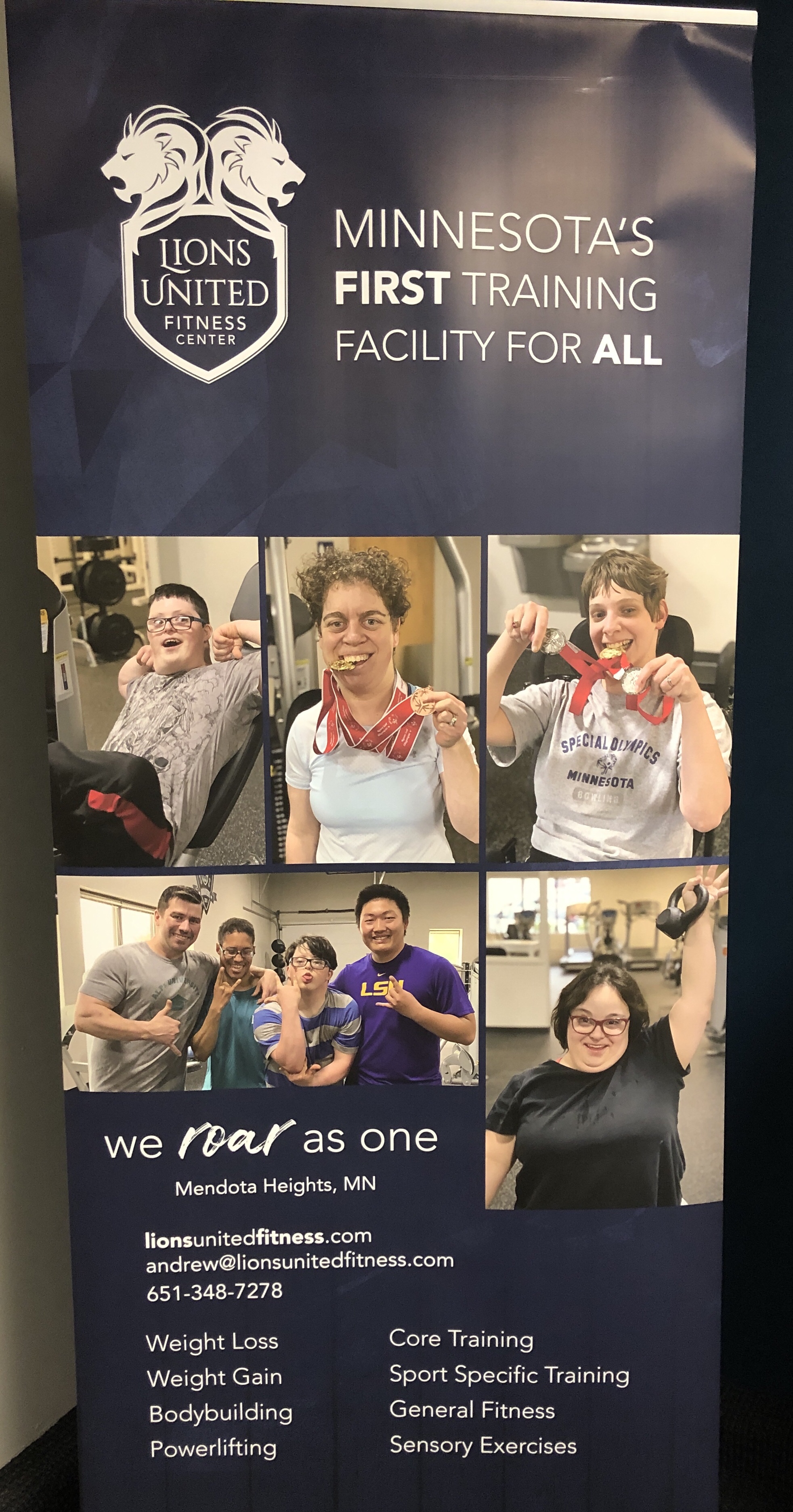
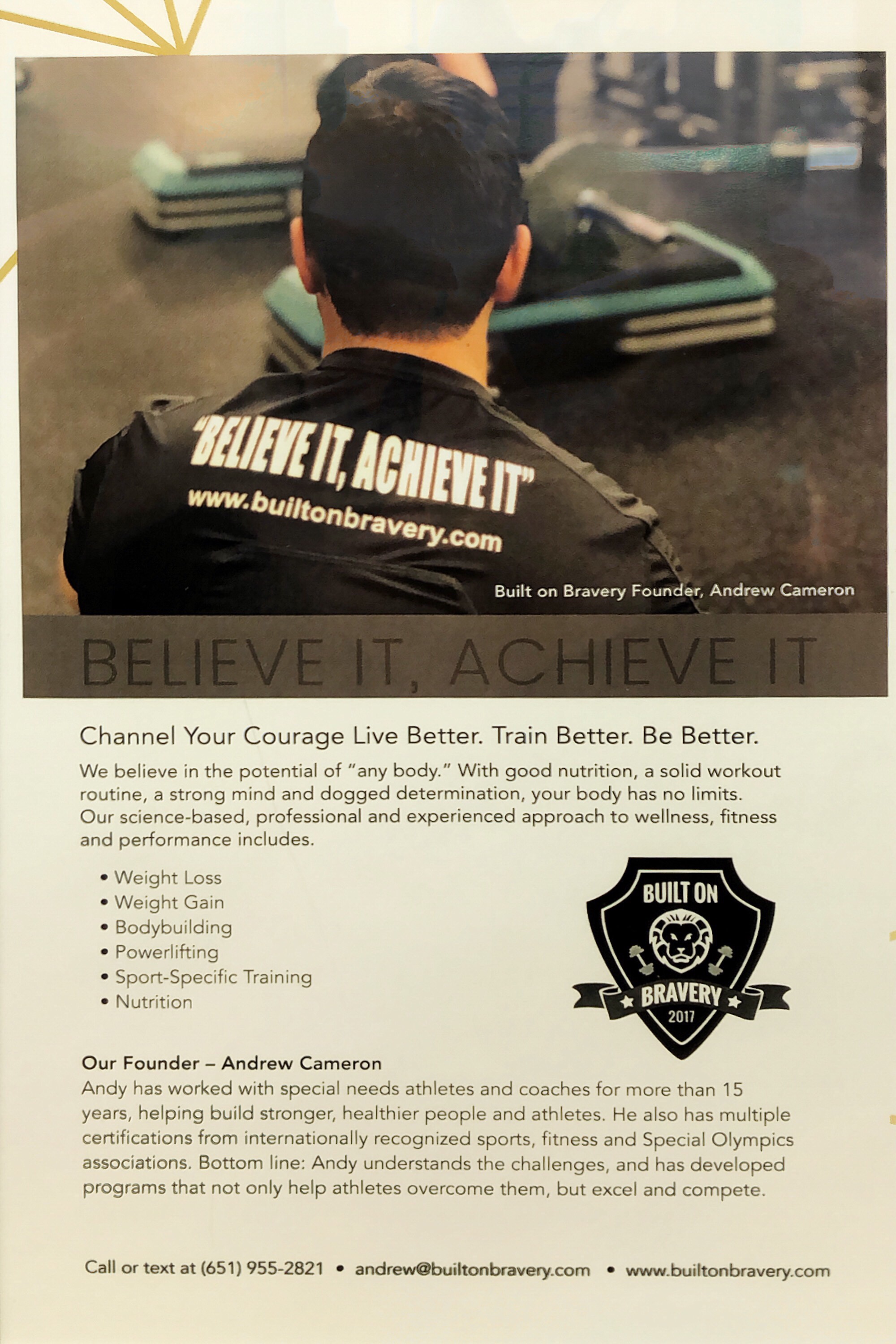
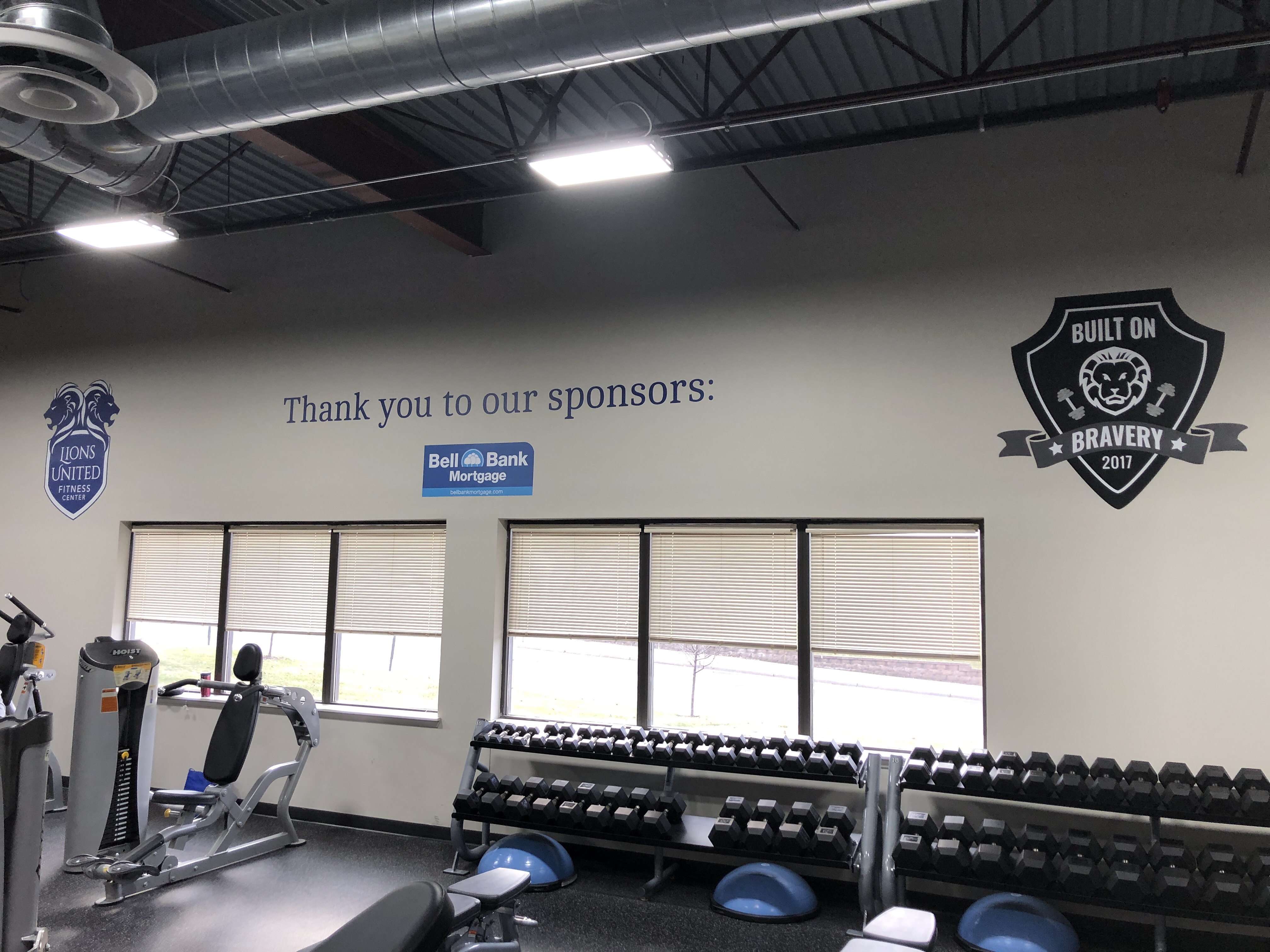
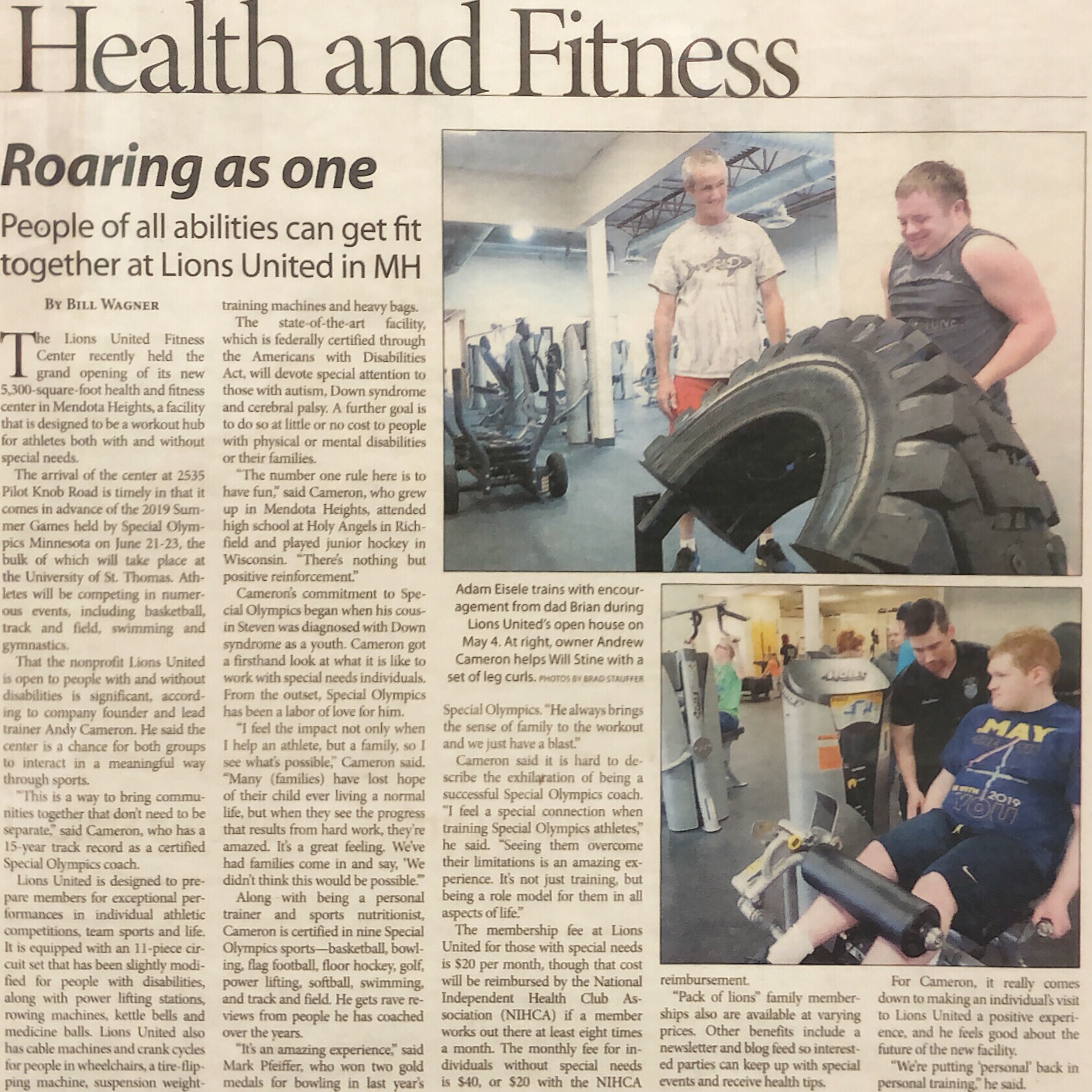
My #1 is doing their special Olympics strength training at Built on Bravery, located at the Mendota Height MN Lions United Fitness Center (map):
... Lions United is a new kind of training center, designed specifically to prepare people with disabilities for exceptional performance in individual competitions, team sports and life, especially people with autism, down syndrome and cerebral palsy. We’re dedicated to Special Olympics’ Project UNIFY and Unified Sports®, which means we bring people of all abilities together to strengthen individuals, relationships and communities....This new facility is first in Minnesota to focus on persons with cognitive disabilities.
The Star Tribune did an interview with the founder:
Q: Membership fees and hours?I think there may also be family memberships.
A: Twenty dollars a month for people with special needs; $40 a month for others. We’ll also have an incentive program where any member can receive up to $20 a month through their insurance. Staffed hours are Monday-Thursday, 3:30 p.m. to 10 p.m.; Friday 8 a.m. to 10 p.m.; Saturday and Sunday 8 a.m. to 6 p.m. But members will have 24-hour access.
There is a big unmet need for health and fitness support of special needs teens and adults. Diets are often worse than average and there are few welcoming places to go. (Several CrossFit gyms are welcoming, but that's a big climb. This facility has grant support.)
We need more like this!


Sunday, July 23, 2017
Adventures of the autistic family - the Duluth Traverse mountain biking trail.
So we did this. We’ve come a long way in 7 years. It’s not like there weren’t issues, but, really, it is kind of amazing.
Wednesday, October 05, 2016
Autism - updating my thinking
This blog is about two very different people with atypical minds connected by family. One is now an adult, the other is almost there. I call them #1 and #2.
#1 wants to be independent. He does less with me now, and more on his own. That’s a sad thing for me, but I’m hardly the first father to miss time with an adult son. #2, at the moment, wants Dad time even as he takes on new things that test his limits. Things like joining a neurotypical high school mountain biking team [1].
Seeing him in that setting I have more insight into how his world looks. When he’s stressed I see him move into a mode where the world fades away to only two people — #2 and Dad.
It’s a kind of extreme focus, a tunnel vision. Even the environment fades away. In cold rain, on a muddy dirt road, surrounded by a team I’m responsible for, I need to stop and give him full attention for an extended discussion of my inadequacies. I see him enter ‘full aspie’ mode, then respond to a threat of decreased screen time by resuming motion, followed by the beginning of a stereotypical dialog. The dialog begins with me accepting responsibility for my faults, then I provide a structured apology, then he performs an analysis of what went wrong, followed shortly by an often perceptive self-analysis, then a return to the world.
Over time the cycle seems to go more quickly. The progress is encouraging, even though the journey is longer than he yet realizes.
#1 carries the autism label. He meets criteria and it helps with services. Autistic is not a great description of him though. He’s more complex. Greene’s “Explosive child”, (see my 2007 reading list) might have the best description of #1.
For #2 autism is a helpful label, and books on “autism” feel relevant. Including one I first read in 2013; and recently reread (emphases mine) …
Autism, Inside and Out - Download The Universe (review and exposition by Steve Silberman of the NeuroTribes blog)
… Harmon … published “Autistic and Seeking a Place in an Adult World," an account of the search for employment by a young artist named Jason Canha. While dozens of news stories a week speculate about candidate genes, environmental factors, and other possible causes for the condition, Harmon zeroed in on the practical issue that all families face when their kid “ages out” of services: How are they supposed to support themselves and learn to live independently?…
… The controversy over the term mindblindness -- and its relationship to compassion and empathy -- is one of the most yawning abysses in autism discourse, and too deep to do justice to here. Suffice it to say that Baron-Cohen made things worse by muddying the distinction between an inability to parse social cues in real time — which seems to be the cognitive issue unifying all points on the spectrum — and empathy, which is more like a capacity to care about how another person is feeling...
… Anyone who has spent time with autistic people can tell you that they're intensely concerned with how other people are feeling, to the point of being overwhelmed. But they often can't piece those feelings together from the usual clues of facial expression, tone of voice, and body language. At the same time, however, autistics are often adept at reading each other’s emotional states from signs that would be opaque to their typical peers…
The thing missing from this short essay, a thing I see in #2, is how dynamic his autism state is. At peak performance he has low-normal perception of his surroundings including some social cues, under stress that falls away. There’s great variability. The essay does capture #2’s empathy and compassion for other people.
- fn -
[1] The mountain biking community has quite a few people on the spectrum. In retrospect that makes sense. There’s a rhythmic swing/bouncing motion to trail riding, especially on flow trails. There’s a social aspect of doing things together, but mostly one is riding the bike and managing the terrain. Conversation is limited and one can always talk about the bike. For #2 most exercise is excruciatingly boring, but mountain biking demands focus and attention. It’s a good spectrum sport.
Monday, April 11, 2016
Hockey as a guide to behavioral interventions
#1 and I made our first trip to the yearly USA Hockey Disabled Hockey Festival, special hockey division.
Watching two of his hockey issues I realized they mapped well onto behavioral issues.
He’s a strong player, but very weak at passing. He also over-responds to aggression or even accidents, rapidly escalating. (Sometimes, to his credit, the emotional response is so strong he removes himself from play. Which isn’t a great response, but not the worst. Fortunately this is special hockey, a more forgiving place.)
I think both of these match onto more global issues.
Passing is cognitively hard and, unless one has skilled teammates, often unrewarding. Instead of scoring a goal, the puck goes to the opposing team. The only reason a strong player passes to a weaker player is because of social pressure and social rewards. Turn-taking type behavior in other words. #1 is weak at this kind of interaction; he doesn’t “feel” the social pressure.
Handling escalation is also tricky. #1’s sister can set him off with a look. (If she’s in a bad mood this works well to spread the feeling.) He is unable to respond with an equal or lesser action; in part because he mis-remembers the initial provocation. In his memory it is far bigger than it was; though in hockey the aggression is often flagrant*.
Both of these issues will factor into our summer behavioral program goals. Special hockey will give us a concrete way to manage progress. If he passes the puck, and returns an elbow with no more than an elbow, then we’ll have made real progress.
* Parenthetically, we have a bit of a referee problem in special hockey. If they come from regular hockey they overlook the routine illegal roughness that is hard for even neurotypical players to handle (fights!) and is well beyond what special hockey players can manage. Conversely, if they are used to less competitive special hockey they are unprepared to see elbows thrown and sticks slashed. It’s a hard job.
Wednesday, September 02, 2015
Special Olympics Minnesota: Athlete Leadership Programs
When he was in High School #1 participated in both adapted and mainstream school (ex: Mountain Biking) and community (ex. Minnesota Special Hockey) sports. His coaches have been some of the most important people in his life; what High School skills he’s developed came as much from his sports work as school work.
Even in his High School years, however, recreational sports were becoming more challenging. His teammates turned into young adults — a somewhat difficult population for a young man with a significant cognitive disability.
He’s in “transition” now (more to come on that I’m sure) and he’s almost 19. After a successful experiences with golf (state champ his div) and tennis (state champ his div) he’s doing more with special olympics. Most significantly, he’s developing personal relationships with other athletes, including role models who’ve taken on leadership positions in special olympics.
Which leads to our next project — engaging him in Special Olympics Athlete Leadership through Minnesota’s Athlete Leadership Programs. This won’t necessarily be easy — he has only recently shown an interest in helping other people and it’s still limited [1]. I’ll have more to say if he’s able to do the December program. If not I think special olympics will be very helpful for him as an athlete participant, particularly because of the role models who’ve completed these programs.
- fn -
[1] People with Downs Syndrome generally have more agreeable and pleasant temperaments than people with Autism — speaking as a father with much experience with the latter. Special Olympics used to be predominantly Downs Syndrome, but selective abortion is making Downs much less common. I am sure that is having many impacts on the organization.
Saturday, June 20, 2015
Lessons from 18 years of a "disruptive mood dysregulation disorder" child
Just back from a Mountain Bike outing with #1. We had a great time. Can’t be that that many special needs NICA mountain bike racers; it’s something he’s proud of. He’s already telling tall tales of his daring runs. Another happy memory.
It didn’t have to be happy though. I’d planned a 3 day trip — some biking, some hanging, some other stuff. Instead after biking on day one he said he wanted to go home. Of course I’d already paid for two nights of peak season lodging.
It’s not clear why he cut the trip short, but in retrospect 3 relatively unstructured days was a lot for him. To make that workable I’d have had to plan out all 3 days in detail, and get the schedule on his iPhone calendar. I think he was also missing his sibs, especially since #2 is leaving for a 1 week autism away camp. Our kids are close, glued by shared struggle.
So this was yet another test for Dad - I’d spent the money, and now he wanted to bail. Did I fight for the principal of “commitment” or fold?
I said it was a happy memory, so you can guess I folded. The money spent was a sunk cost. It didn’t matter any more. Once I told him we’d head home his mood transformed and we had a happy dinner. The next morning he hung out while I went off on a bike adventure of my own. We had a fun drive home. Tonight he remembers the trip fondly. I passed the test.
Our drive home gave me time to reflect. #1 is 18 now, and he’s “finished” [1] High School. Overall we’re about where I’d hoped we would be with him. There’s lots to work on, but he keeps making progress. Maybe we all did something right, not least his coaches and teachers.
So what did we do right? I think I can put it into 6 short phrases, 5 of which are deliberately familiar.
- Choose your battles.
- Make happy memories.
- Accentuate the positive.
- Cut your losses.
- Tomorrow is another day.
- Quit when you’re ahead.
- Greenes/Explosive child: Divide behaviors into A (irreversible harm risk), B (criminal, reversible harm, C (infuriating, obnoxious). Always work on A, take B selectively, C is nice to do.
- Make happy memories. Memories are made of doing things. Declare victory early. Take pictures. Put ‘em on the family screens. Burn the happy memories into the kids brains. Soon they’re programmed into thinking life was all happy. They forget the rest…
- Kazdin and Shamu: Reward desired behavior, ignore (extinguish) unwanted.
- Realize when you’ve got a losing hand and fold. That’s what I did today. After a while you know when you can win and when it’s time to remember what a sunk cost is.
- It’s not a sprint, it’s an ultra-marathon. Don’t burn out in one battle, there will be time to engage with a winning hand.
- When you’re winning, declare and celebrate victory. Don’t wait to see things to the end, celebrate the moment. Do this right and you have a heck of a winning streak. In this season, we have the power to define when each game ends and a new one begins.
[1] He’s actually in an indeterminate state, which is a weird arrangement peculiar to special needs students. He completed his adapted course work, but after the graduation ceremony he was diverted from picking up his diploma. This magically keeps him in the school system, so he’s funded for a “transition” program that’s supposed to teach “work schools”. We think of it as 3 years of somewhat useful entertainment while his frontal lobes develop. I assume this weird arrangement is a time honored manipulation of old statute language.
I may write more about High School (the sports teams were the best part) and “transition” in future. There’s a lot to say, most of it mixed.
- Things we might have done differently: High School 3/2015
- Changing behavior in children: Kazdin for most and what we do now 4/13/2015
- “Explosive Child” Greenes has web site for “Disruptive Mood Dysregulation Disorder” kids and caregivers 12/2013
- Training exotic animals, husbands and difficult children 6/2006
- Resolution 242 - discounting sunk costs 8/2010
- Be the Best You can Be: Techniques for negotiation with people on the autism spectrum 11/2014
- Be the Best You can Be: Reading about autism and ADHD - our personal favorites 11/2007
Sunday, October 26, 2014
Special needs interscholastic mountain bike racing
NICA, the National Interscholastic Cycling Association, has been expanding into Minnesota. This year #1’s high school participated in the mountain biking program, and he joined the team. He started riding with them this past summer.
Special needs and mountain biking are not an obvious combination, but despite his autism-spectrum cognitive disability #1 has been a pretty good recreational athlete. He’s played mainstream rec baseball, hockey, and soccer, learned swimming (mean butterfly), XC skiing, snowboarding, skateboarding, road biking [1] and more. High school wrestling didn’t go too well, but I thought that one was seriously crazy.
So mountain biking wasn’t out of the question. He joined the team, did well on practices when I was able to join as a ride leader, and …
… he completed two NICA mountain bike races - riding challenging courses for about 2 hours. He’s done some impressive things in his almost 18 years, but this was the toughest challenge he’s taken on.
It wasn’t easy for me either. Over the past two years, perhaps as #1 becomes more aware of the gulf between him and his neurotypical peers, he’s tended to make a good start on his sports teams but then get discouraged and anxious — and finally drop out [2]. This hits me on a tender spot - I’m not good with quitting. It doesn’t help that he usually wants me to be an active parent — so when I follow him out the door I leave his team short a parent volunteer.
I had to struggle to remember lessons from a year ago, but I was also inspired by a May 2014 NYT article on interventions that help low confidence college students…
Who Gets to Graduate? - NYTimes.com
Select the students who are least likely to do well, but in all your communications with them, convey the idea that you have selected them for this special program not because you fear they will fail, but because you are confident they can succeed…
… The negative thoughts took different forms in each individual, of course, but they mostly gathered around two ideas. One set of thoughts was about belonging. Students in transition often experienced profound doubts about whether they really belonged — or could ever belong — in their new institution. The other was connected to ability. Many students believed in what Carol Dweck had named an entity theory of intelligence — that intelligence was a fixed quality that was impossible to improve through practice or study. And so when they experienced cues that might suggest that they weren’t smart or academically able — a bad grade on a test, for instance — they would often interpret those as a sign that they could never succeed. Doubts about belonging and doubts about ability often fed on each other, and together they created a sense of helplessness. That helplessness dissuaded students from taking any steps to change things. Why study if I can’t get smarter? Why go out and meet new friends if no one will want to talk to me anyway? Before long, the nagging doubts became self-fulfilling prophecies….
… Every college freshman — rich or poor, white or minority, first-generation or legacy — experiences academic setbacks and awkward moments when they feel they don’t belong. But white students and wealthy students and students with college-graduate parents tend not to take those moments too seriously or too personally. Sure, they still feel bad when they fail a test or get in a fight with a roommate or are turned down for a date. But in general, they don’t interpret those setbacks as a sign that they don’t belong in college or that they’re not going to succeed there…
It is only students facing the particular fears and anxieties and experiences of exclusion that come with being a minority — whether by race or by class — who are susceptible to this problem. Those students often misinterpret temporary setbacks as a permanent indication that they can’t succeed or don’t belong [3]
#1 isn’t going to college, but I think there’s a broad lesson hear for special needs students as well.
So, my part in this project was to keep it positive. I’d grind my teeth when he skipped practice, but I’d grind quietly. I backed off, didn’t get wound up [4], stayed positive. This only worked because his coaches were pretty laid back — something that may be more common in mountain bikers than baseball coaches. I kept the bribery to small things offered when he was obviously looking for something to boost his confidence.
It worked. We could play it again and it might work better or it might not work at all. We were right on the edge.
Knowing he can do this though — that’s a confidence booster that was worth the wear and tear on the both of us.
- fn -
[1] The road biking has become his first self-discovered anxiety/stress control behavior. He does 10-15 miles a day, tracked using Find Friends.app
[2] My interpretation. It’s very hard to to judge his emotional states, I’m not sure they map onto common models.
[3] Not directly related to this post, but I grew up poor and ended up, by chance, at Caltech. I definitely felt like a fraud, I think I only succeeded because I had no other choice.
[4] Much. Except when the low end bike he started with reached end of life. I bought a decent race-quality (entry level) mountain bike, at which point he stopped mountain biking altogether. That cost me some enamel; I think he found it hard to make the transition to a new bike. Change.
See also
- You never know … 2014
- Autistic exercise: options for the distracted teen 3/2014
- Minneapolis and Loppet Foundation/Courage Center launch Adaptive Cross-Country Ski program 12/2012
- Adventures in special needs – A Nordic ski resort 2/2010. Wow, only 4 years ago, but things are much easier now.
Saturday, June 21, 2014
Autistic "swingers" should consider inline skating
I touched on inline skating in a previous post about exercise for the autistic teen, but after a recent skate with #2 I think it deserves a post of its own. To explain why, I’m going to start with a novel way to divide up the “autism” world.
There are lots of ways to name and classify variant minds, and most of them are headed for the trash heap. In that context I think we’re free to name our own. So today I’m going to divide the world of non-adaptive [1] variant minds into swingers and unswingers.
Swingers are the autism-spectrum teens and adults who love to swing. They are the teens who tear apart the Rainbow play sets built for children [2]. Unswingers may share the legally useful diagnosis of “autism”, but they have no interest in rhythmic motion.
Swinger and unswinger autism isn’t a typical diagnostic divide, but I suspect it’s a useful division — with implications for health and behavior. We have kids on both sides of that divide — one swinger and one unswinger.
Which brings me back to inline skating. #1, the unswinger, has no interesting in inline skating outdoors. He can’t explain his feelings verbally, but my guess is he considers it dangerous and uninteresting.
On the other hand #2 is a swinger, and inline skating is one of the few outdoor activities he clearly enjoys. Cross-country (nordic) skiing is another one. In both cases, but especially with inline skating, there’s a rhythmic motion of core muscles and a sensation of falling and rising, floating and flying. In other words, a swinging sensation.
#2 has the typical motor coordination problems of Asperger’s syndrome, but he’s a strong swinger — and an increasingly strong inline skater. His technique is still weak, but over many years it’s slowly getting better. More significantly, he’s comfortable over urban streets and sidewalks — terrain that defeats many stronger inline skaters [3]. He’s generally not tolerant of scrapes and falls, but he shrugs them off when skating [4].
I don’t know of any other summer activity that has the rhythmic rise and fall of the swing. So for swinger-positive teens, and with recognition that anything out of the basement is risky, I recommend a look at inline skating. With, it should not need to be mentioned, wrist guards and a very good helmet that should be replaced every 3-5 years and with ANY head impact. [5]
[1] Non-adaptive, meaning not competitive in our current environment, an environment that requires a high degree of emotional control, cognitive flexibility, and social interaction. In this environment it’s not only “autistic” minds that are disadvantaged.
[2] I’m working on reinforcing the existing structure so it will withstand #2’s adult wait and swinging style.
[3] It’s a bit surprising how many club skaters, who can be very fast on smooth trails, do poorly on urban landscapes.
[4] There’s a reason that inline skating is not as popular as it was when boomers were younger. It’s a contact sport. I’m a strong inline skater, and every few years I find a way to fall.
[5] I wear a helmet when bicycling, but I recognize there are valid arguments that for some people, in some conditions, the benefit of a bicycle helmet is less than I would have thought. With inline skating I am as certain as death and taxes that a helmet is beneficial and wrist guards are very helpful. With any non-trivial impact the helmet needs to be replaced — like air bags helmets are single use devices. They should also be discarded after 3-5 years even when pristine — they compressive material degrades with time and sunlight.
Friday, July 19, 2013
Special Olympics Minnesota has a summer sports camp
We've always known of the great Special Olympics sports opportunities in the Twin Cities, but until this year we had too many other activities going on to participate. This year though #1 wanted to start playing tennis, and, as it turned out, Special Olympics was a great way for him to start (he won state in his division - gotta brag for him).
Despite his tennis participation we didn't know of the basketball, tennis, flat football and bowling summer camp that just passed:
Summer Sports Camp | Special Olympics Minnesota
June 12-15, 2013
St. Olaf College, Northfield, MN
Training will be offered in the sports of basketball, bowling, flag football and tennis. The daily sports training will be complimented with afternoon and evening activities, which will include recreational sports (bocce, ultimate frisbee, volleyball, etc.), arts and crafts, bingo, a talent show, movie night, a dance, ALPs night, and many more fun activities.
$325 per camper; includes room and board, meals, facilities/training fees and camp T-shirt. (scholarships available)
We heard about this overnight camp from a MN Special Hockey Eagles teammate. The price must be heavily subsidized, and there are scholarships available.
The 2013 application isn't online any more, but I found a copy. In 2013 the application deadline was June 1.
Next year we're hoping to get several Eagles to attend.
Sunday, March 17, 2013
Adolescent special needs: Sometimes Judo works
#1 was on track to give up on mainstream hockey halfway through the season. I'd been using carrot and (proverbial) stick but he was dug in and sullen. It looked like he was going to lose one of his best growth and happiness sources, that he was going to drop out of hockey just as he'd dropped out of baseball last summer.
I was frustrated, but I could see I wasn't going to win. Better to lose this battle than to lose our relationship.
So when he challenged me to bribe him to finish the season I pulled a Judo move. I stepped back.
I sat down with him at a time I chose -- when he was at his best. I said that now that he was almost an adult, he really had to make his own decisions. I told him I thought he'd gain a lot from continuing and that it would make me happy, but it was his decision. There'd be no prize or reward for finishing the season -- just his usual post-hockey chips or soda. There would be no punishment for dropping out ...
Well ... I cheated a bit on the last. I didn't want him substituting iPhone-zombie-time for his hockey. So there'd be no computer/iPhone use during times he would have been at hockey. He could read or do other activities [1].
Of course, as you can guess from the post title, it worked. At first he was uncertain, but one night we walked through the season schedule. He picked one late night practice he'd skip and one he'd miss due to a High School sports conflict. (He ended up missing only one practice when I was out of town and we couldn't bring him.) After that review he was relaxed and enthusiastic.
I don't know if it was my talk that worked, or the support of his coaches who also had Special Hockey experience, or if a girl he liked said something nice about his hockey. At his age I'm only one of a lot of influences, and probably not the biggest one.
I was surprised that he did so well; I don't think this would have worked in the past. His mind is developing -- he's starting to have more of a sense of time and of future events, and he's starting to work with abstractions like "promises" and "obligations" and "duty" and "honesty". He never used to respond to 'negative' feedback [2], but now he seems to consider consequences a wee bit beyond the immediate.
I don't want to overstate the changes. A bird in the hand is still worth a thousand in the bush. There is progress though, and reason to celebrate another victory. [3].
- fn -
[1] We have very limited household television access.
[2] Hence our heavy use of positive incentives and extinction rather than the balanced approaches that work for most children. We have a neurotypical daughter, and she essentially raised herself with a minuscule parental contribution. Our #2 is at the Asperger's end of the spectrum but is super-sensitive to feedback. #1 is different. Yes, we snort milk out our noses when we read conventional parenting books.
[3] Our philosophy is to celebrate victory often. So every time we can plausibly declare victory, we do. There should be a name for this philosophy; it results in a lifelong string of repeated victories until the game is called.
See also
- Reading about autism and ADHD - our personal favorites 11/2007
- Changing behavior in children: Kazdin for most and what we do now 4/2008
- Net world and guiding the special needs adolescent - tricky business 3/2013
- Special needs adolescence: separating compulsion from poor choices 8/2012
- Special needs adolescence: enter the unknown country. 8/2012
Saturday, February 16, 2013
Title IX for disabled student sports?
I've had concerns with my #1's school, but some very dedicated teachers have provided him with adapted floor hockey and adapted soccer activities. For him this time is more valuable than most of his coursework.
The exercise is good -- adapted floor hockey is more work than I'd naively expected. The social activity is more important though. He's able to work and play with his peers.
It wasn't easy for his teachers and the schools to put these programs together. They have to work around the fuzzy boundaries of "CI" and "PI", a divide that predates autism spectrum disorder. His teammates are technically "PI" (physically impaired) but most have some degree of "CI" (cognitive impairment) as well. In his case the CI is significant and the PI a bit of a stretch -- but "pure" CI opportunities are very limited.
For #2 son, who has "high functioning" autism, there are no school sport options. Whereas #1 has a relatively easy time joining adapted or mainstream sports teams, #2 would need some inventiveness. (He does quite a few sports -- but on his own terms.)
For both of my boys, and for special needs students in general, there may be some good news on sports access....
Education Dept. Clarifies Law on Disabled Students’ Access to Sports - NYTimes.com
The Education Department’s Office for Civil Rights clarified legal obligations Friday for school districts in providing access to sports for students with disabilities....
... The guidance concerns Section 504 of the Rehabilitation Act of 1973, a law that deals with the rights of disabled people who participate in activities that receive federal dollars.
A school district ‘is required to provide a qualified student with a disability an opportunity to benefit from the school district’s program equal to that of students without disabilities,’ according to the Education Department.
Advocates for disabled athletes, some of whom have pressed legal claims against state athletic associations in recent years, praised the clarification of rules and said that as a result, participation for disabled athletes could rise.
‘This is a landmark moment for students with disabilities,’ Terri Lakowski, chief executive of Active Policy Solutions, a Washington-based advocacy group, said. ‘It will do for kids with disabilities what Title IX did for women. This level of clarity has been missing for years.’
At least 12 states have passed laws in recent years requiring schools to include disabled students in sports and other extracurricular programs, and the Education Department’s guidance is considered a complement to those laws.
‘Taking them together with the state laws means more opportunities for disabled athletes,’ Lakowski said. According to the department, a district’s legal obligation to comply ‘supersedes any rule of any association, organization, club or league that would render a student ineligible to participate, or limit the eligibility of a student to participate’ based on disability...
That sounds encouraging. But ..
... No student with a disability is guaranteed a spot on an athletic team for which other students must try out, according to the Education Department. But districts must ‘afford qualified students with disabilities an equal opportunity for participation in extracurricular athletics in an integrated manner to the maximum extent appropriate to the needs of the student.’ ...
That sounds like it's meaningless.
I think it's premature to call this "Title IX" for disabled sports access, even if we remember that it took a lot of lawsuits to make Title IX more than words. I'll go with "encouraging" for now, but we need to watch where this goes. It may make a difference if litigation is needed.
Tuesday, December 25, 2012
Minneapolis and Loppet Foundation/Courage Center launch Adaptive Cross-Country Ski program
#1 and #2 have both become quite good XC skiers. It took some ingenuity to get there [1]. Now there's a new option to make winter more fun... (emphases mine):
Minneapolis Park & Recreation Board - Cross-Country Skiing:
... Adaptive Cross-Country Ski Program
The Minneapolis Park and Recreation Board is teaming up with the Loppet Foundation and Courage Center to offer an Adaptive Cross Country Ski Program for individuals with visual impairments, physical and/or developmental disabilities.
Athletes will be paired one-on-one with instructors trained by Courage Center, with sessions culminating with the Luminary Loppet candlelit ski, part of the City of Lakes Loppet Cross-Country Ski Festival.... Five Thursday Sessions: Jan. 3, 10, 17, 24, 31, 6:30-8 p.m. (meet at the Wirth Par 3 building) Cost: $95, includes equipment, trail passes, coaching, and registration fee for the Luminary Loppet (with transportation to and from the event).
The authors omitted directions on how to sign up for this (oops), but see the update below..
See also:
- Minnesota Special Hockey: Minnesota has the world's largest special hockey program [2] for persons with cognitive disabilities -- including people who play on a sliding seat. #1 and #2 have played for about six years, we just started another season (Facebook: Eagles). Our latest challenge: players who, over the course of years, have developed to a rec league skill level.
- Sports and athletic participation for special needs students -- and all non-elite students: American school sport programs resemble American medicine -- great for the elite, otherwise not so hot.
- Adventures in special needs – A Nordic ski resort. This was ambitious.
- National Sports Center for the Disabled - summer and winter recreation in Winter Park, Colorado: Amazing program.
- Pushing the envelope does not always go well There are always risks.
- MSP Trails - Twin Cities Bike, Ski and Skate: Cross-country skiing and skijoring: Minnesota DNR excels
- Gordon's Notes: Nordic skiing: how to tow a kid (when you're starting out. I called this Skidadding. I wonder though about skijoring for special needs ski training ...)
[1] I've never fully documented the Machiavellian program I followed. #3 is neurotypical, and loves to do special things with her mother. So they did an intro class together. #2 (Asperger's) is not a natural skier, but he is fiercely competitive with #2. So we played on that to get him to outrace her. That left #1, who is a natural athlete -- once we have Mom, #2 and #3 and skijoring dog on board he will naturally go along. It unfolded as planned.
[2] Largest in North America, and we don't think any other country has a larger program.
Update 12/28/2012
Some more information on how to register: contact "Nels Dyste; nels.dyste@CourageCenter.org".
Sunday, September 30, 2012
Pushing the envelope does not always go well
Nine years ago a girl drowned in a Minneapolis lake.
That is a sorrowful story that is told many times in many places every year. This particular tragedy, however, had a twist ...
Michigan girl drowns in Minneapolis lake 7/19/2003
... A 7-year-old blind girl from Michigan drowned Friday night in Lake Calhoun in Minneapolis while she was swimming with fellow blind children. The girl was with a group of about a dozen visually impaired children from Blind Inc. in Minneapolis. They were off the north beach when lifeguards doing a safety check noticed her missing ...
She was pushing the envelope, doing something many blind people don't do. Sighted kids drown in lakes too, but her risk was above average.
Maybe her parents beat themselves up. Maybe some people thought they were careless parents. I don't know the details, but from my distance I wanted to say to them - forgive yourself. Disability means a full life is often riskier than average -- but all life is risky. None of us get out of this alive. Most us don't want to live in a padded room for as long as possible, we want the best life we can have. We take risks.
So today I took a risk. Nobody died, nobody was even hurt -- but it could have been worse. Seems only fair for me to share a story of an experiment that went off the rails a bit.
It began with a mountain bike outing to the new and superb Lebanon Hills trails. All three did well on the skills section; #1(ADHD, autism, anxiety, low IQ) bopped through the intermediate stuff without blinking, and #2 (Asperger) was right behind 'em. So we set off on the green trail. #3 (neurotypical) was working through a bit of trail anxiety, so we fell behind the guys.
So they got bored, and took off on the blue trail. Otherwise known as "the trail of tears", though I didn't learn that name until later.
#1 called to tell me he'd gone off, but I didn't know the trails that well and assumed he couldn't get that far. (I had scanned the trail map, but didn't notice the long, long blue trail on the section I'd studied). Back at the trailhead a cyclicst overheard me talking about the blue trail with #1, and, being a wise stranger, she butted into "my business" (joking there, I was grateful) and clued me in. Meanwhile #1 was getting anxious and agitated and had split from #2, and #2 had run out of mobile minutes while I was pinned down in the parking lot with #3.
It looked like we were running out of options, but before I could plan the 911 call my helper called in her husband and his friend and they took off down the blue trail at full-rescue velocity. Got to the boys just as an increasingly agitated #1 was going to split for a roadway he could see in the distance. They were all back about twenty minutes later.
So, in the end, pushing the envelope turned out ok. The boys learned some valuable lessons about being lost like "stay together, don't split up" and "stop and stay on the trail" and "wait for Dad" and "if you're lost, choose a trustworthy looking stranger and ask for help" [1]. I learned that I should give #2 son the "tracer phone" [2] on mountain bike trips, and that I should have printed, labeled and distributed maps the night before the trip.
Next time we push the envelope, I hope we'll have a larger margin of error. Meanwhile, thank you Greater Mankata Multisport Club heroes!
[1] Yes, this sounds odd in the world of 'don't talk to strangers'. Surprise -- the risk of approaching a stranger for help is extremely low. The risks are when strangers approach unsolicited, especially in non-emergent situations.
[2] We have one kid phone with a data plan that can be a locator.
Saturday, September 29, 2012
Sports and athletic participation for special needs students -- and all non-elite students
Recently I reviewed the state of school-based athletic opportunities for special needs students (see also Special Hockey).
The benefits of athletic involvement are clear. They're the same as benefits for neurotypical students, only more so...
- Kids who are physically active to their personal bounds are happier, sleep better, and are easier to work with.
- We know the best way to boost a middle-aged brain is to exercise (forget crosswords, get up and walk!). There's good reason to think exercise is good for young brains too.
- For many of our community team activities, from hockey to cross country running, is the best way to develop social skills and friendships.
- For some special needs kids athletic activities can become a major part of their adult life -- indefinitely. (We have special hockey players in their 50s.)
- Special needs kids are just as vulnerable to obesity problems as neurotypical kids.
It's not easy to make this happen though. American schools are notorious for focusing on elite athletics, to the detriment of all non-elites. It's a big problem, but we can chip away at it.
One area we can manage better is the distinction between CI (cognitive impairment) and PI (physical impairment) events. in our school district kids with autism are technically excluded from PI events (in practice "fine motor deficit" can used to fudge the distinction), but CI options can be very limited even for low IQ autistic kids.
The CI/PI distinction is fuzzy. Many CI athletes have some physical disabilities, and most of the PI athletes I know have had at least a learning disorder. I suspect the division was created when Downs Syndrome was more common, and autism less common (or less recognized). We need to develop a more flexible approach.
Special Olympics has done a good job of adapting to changing demographics of special needs, but the schools might be a bit beyond the curve. On a smaller scale Special Hockey has managed to work with a wide range of both cognitive and physical disability -- all on one team!
In the near term I hope we can generate increased demand for activities from special needs parents, and provide more support for volunteer coaches and managers while learning from Special Olympics and Special Hockey. In the longer term I hope to see a kind of reverse- "inclusion" in special needs sports. What we learn from special needs school athletics may work well for all non-elite students.